Turf Disease Articles

Plan for autumn disease before it starts!
20 July 2026


Weed threat looms after summer turf cover loss
15 July 2026
Latest Articles


The enemy within: managing poa
Managing Poa annua can be a major concern for turf professionals due to its opportunistic nature, shallow rooting system, susceptibility to disease and environmental stress. We take a deep dive into what poa is and how to manage it…

Understanding Poa
Understanding the unique traits, strengths and weaknesses of Poa annua is essential for effective management of turf surfaces. From seed selection and establishment techniques to maintenance practices including mowing, fertilising, irrigation, and disease management, an integrated management plan is key to reducing negative impacts from Poa annua and achieving optimal turf performance.
Poa annua is a globally widespread grass species, recognised in the Global Compendium of Weeds due to its opportunistic and adaptable nature. It’s ability to adapt means it has established in a wide range of environments, from coastal regions to elevations in excess of 1,000 m and in climate zones spanning from the tropics to the poles. The persistence of Poa annua in turf surfaces is due to its highly adaptable nature which sees it thriving in a range of soil conditions and tolerating frequent mowing, foot traffic and even freezing temperatures.
Considered a contaminant in grass seed production, Poa annua seeds can be difficult to separate from desirable turfgrass species. With individual plants capable of producing large amounts of seed (1000- 2000+ seeds per plant) throughout the growing season, the risk of spread into new areas is high.
Poa annua prioritises reproduction through seed production with the result being that the roots tend to be relatively small. This means that conditions, uses, or management of turf surfaces that promote bare soil can lead to the introduction of Poa annua due to reduced competition from other turf species. Conversely, practices that promote deep rooting and a dense sward reduce the competitive ability of Poa annua.
Dr Abigail Graceson
Technical Manager, Agrovista Amenity

Integrated turf management practices
Managing Poa annua requires a nuanced approach that combines multiple practices such as mowing, irrigation, fertilising, aeration and disease prevention.
If Poa annua is the enemy your friends are the perennial grassess, ryegrass for sportsturf or bent and fescue for fineturf and the ‘enemy’ being annual meadowgrass.
Poa annua is demanding and requires careful management, if done well it can produce reasonably acceptable surfaces in the fineturf setting in the short term, however it’s what’s required to meet those demands in terms of inputs and resources that make it the less sustainable choice.
It’s weak nature and prolific seeding makes it unacceptable in the sportsturf environment where ryegrass is the leading species. With a strategic and integrated approach, the goal is to be in a position where the dominance of this highly opportunistic and adaptable grass can be reduced significantly.

Cultural methods
- Aeration: Regular aeration and topdressing improve soil structure and drainage, reducing the favourable conditions Poa annua thrives in.
- Mowing practices: Maintaining consistent mowing heights that are appropriate to your turf species. Avoiding scalping, which encourages poa ingress. Additionally, grooming and brushing can help manage seedheads.
- Irrigation: Avoiding overwatering, by utilising deep and infrequent irrigation which encourages deep rooting of the desirable grasses.
- Nutrition: Maintain optimum plant health with a balanced fertiliser programme which acts to discourage any poa dominance. Nutrient inputs should be based on soil testing, avoid excess nitrogen and phosphorous which promote rapid poa growth.
- Overseeding: Regular overseeding with high quality cultivars of desirable species (e.g. bents, fescue and perennial ryegrass) helps compete against Poa annua.
Chemical Control methods
- Plant Growth Regulators (PGRs): Products like trinexapac-ethyl and Prohexadione-calcium regulate plant growth, reducing clipping yield and produces a dense sward which reduces Poa annua ingress. Prohexadione-calcium applied ahead of seedhead emergence can reduce flowering and the number of new seeds, lowering the next generation seedbank.
Environmental methods
- Encourage soil microbial activity: Diverse microbial life enhances soil health and the interactions with the perennial grass species, indirectly reducing poa competitiveness.
- Light management/airflow: Improve light availability and airflow by removing trees, reducing shade and encouraging drier conditions and less disease incidence - which discourages Poa annua and supports perennial species thriving.

While complete eradication of Poa annua is unrealistic, sustained reduction is achievable through integrated turf management practices. A combination of cultural, chemical and environmental strategies, tailored to your site’s needs, will reduce poa populations and improve playing surface quality. Forward planning that is well communicated and consistent, with data-driven decision-making, is key to achieving long-term success.
Tom Wood
B.Sc (Hons) | BASIS | FACTS.
Technical Specialist, Agrovista Amenity
Global solutions and practices
How does poa differ to other grasses used in the USA? James H. Baird, Ph.D. Professor and Turfgrass Specialist reports.
In terms of poa management, describe it from a global view of solutions and practices
Annual bluegrass (Poa annua) is the most ubiquitous turfgrass species in the world. Often managed as a turf by default, due to widespread distribution in climates represented by California, annual bluegrass is also one of, if not the world’s most serious turfgrass weeds - in part because it is extremely susceptible to most biotic and abiotic stresses, often resulting in sudden death. Thus, more pesticides are used on annual bluegrass to eradicate or help keep it alive than any other turfgrass species.
If the turfgrass industry had both an effective and selective means of maintaining poa-free turf, then far fewer pesticides would be needed for managing turfgrasses, especially on putting greens. Currently, few herbicides are registered for pre and postemergence control of annual bluegrass in creeping bentgrass (Agrostis stolonifera) putting greens in the United States. Both cumyluron and PoaCure offer great hope for poa management on putting greens and other turf surfaces.

We have not observed significant reduction in poa with bensulide herbicide. Both Cumyluron and PoaCure are complementary to one another in that they possess different modes of action and strengths (one is stronger preemergence while the other is stronger postemergence), which can ultimately prevent or at least delay development of herbicide resistance if used properly and in rotations.
Tell us about Cumyluron and its presence in the global sphere including the USA and how it is being used as an approved solution in amenity situations?
Cumyluron is a urea herbicide under development in the United States by Marubeni Corporation, Tokyo, Japan and their subsidiary, Helena Chemical Company, Tennessee. Environmental Protection Agency (EPA) registration is anticipated in 2026/2027.
Cumyluron has mostly selective preemergence, but also postemergence activity, against annual bluegrass and other weedy grass species in creeping bentgrass and most other major cool and warm-season turfgrass species.
What sets Cumyluron apart from almost all other poa herbicides, is its safety for use on putting greens. Only methiozolin (PoaCure) and bensulide (Bensumec) are currently registered in the U.S. for poa control in bentgrass greens.
In addition, only two applications of Cumyluron are needed per calendar year - with at least one application in the autumn for optimal poa control.
Other than that, timing of Cumyluron application is not that critical, given that it has both post and preemergence activity.
UC Riverside has been conducting research with Cumyluron off and on since 2010. Our research has demonstrated that Cumyluron can maintain or restore putting greens to 100% bentgrass within 2-3 years of semi-annual applications on putting greens containing <20% poa populations. In another study on a green with ca. 60% poa, Cumyluron reduced poa populations by about one-half following two years of applications.
My viewpoint of poa management in the U.S. vs. elsewhere is largely based on climatic conditions and golf industry/golfer expectations. Poa has more difficulty surviving in regions with weather extremes; too hot, cold, wet, dry, humid, etc. Couple this with high or unreasonable expectations from golfers, or often from members of the golf turf industry trying to outdo one another.
Poa, especially perennial biotypes, can provide ideal playing surfaces UNTIL the combination of weather and unrealistic expectations cause sudden and rapid loss of turf. Although climate change is affecting the entire world and it’s getting hotter in places like the UK, my impression is that golfers and greenkeepers alike in the UK are more realistic in terms of turf management and the golfing experience. Greens do not have to be lightning fast to enjoy the game or risk loss of poa, so perhaps there isn’t as much of a need to rid poa on greens and other surfaces with herbicides.
*PLEASE NOTE - Some of the products mentioned within this section are not UK based. They aren’t yet in the UK market and are currently being trialled and registered in the US.
James H. Baird
Ph.D. Professor and Turfgrass Specialist in Cooperative Extension Department of Botany and Plant Sciences University of California, Riverside.
Positive product choice - Kiel Barrett: Leeds United
Kiel, the Head Groundskeeper at Leeds United, recently detailed a significant turf issue that arose during the past season - a rare and widespread outbreak of Poa annua on the stadium pitch.
Kiel said. “This season, we had to tackle a larger outbreak of Poa annua within the stadium than we have previously seen. Given the even coverage across the pitch, I suspect it may have been due to contamination of the seed mix.”
While Poa annua is not unusual at the club’s training ground, which is located near open farmland, its appearance at the stadium is far less common. Kiel emphasized the importance of maintaining turf quality at Leeds United, noting the stark difference between the two sites.
“The training ground will always have outbreaks because of its rural location. But at the stadium, it matters more - that’s where the matches are played, week in, week out, in front of 37,890 fans, thousands more on TV, plus highlight clips on social media. If you have a Poa annua outbreak, you can clearly see it.”

Visual disruption
One of the main issues with Poa annua is its unsightly appearance compared to Perennial Ryegrass, which is typically used on elite football pitches.
“Aesthetically, it is an unwanted visual in a somewhat perfect Perennial Ryegrass sward. The lighter yellowish colour takes away from the shiny, deep green leaf of the ryegrass. It impacts the uniformity of colour within the mowing stripes. Once the Poa annua plant becomes established, there is little that can be done - you can’t get away from it.”
Safety and performance concerns
Beyond aesthetics, Poa annua can also affect playing performance and safety. Kiel reported that the outbreak reached approximately 10% coverage across the surface at its peak.
“Studies show that Poa annua produces lower traction values than a perennial ryegrass sward. This can affect player footing and increase the risk of slips. However, we were still in the ‘excellent’ bracket of the FIFA Pitch Rating System - despite having a significant Poa annua presence as the season progressed.”
FIFA’s pitch rating tests assess various elements such as surface traction, ball roll, and uniformity. Despite the outbreak, the pitch retained a high-quality rating, reflecting the grounds team’s effective maintenance efforts.

Remedial action taken
Kiel and his team implemented a range of targeted measures to manage and suppress the outbreak. The timing of interventions was critical, depending on the seasonal conditions. Kiel commented: “I suspect that Poa annua was in the seed mix - that’s why we saw even coverage across the entire pitch.”
“We went back to basics. We carried out a light rake on the surface to keep it clean, then verticut it to try and remove as much Poa annua seed head as possible. After that, we continued with regular overseeding using Perennial Ryegrass.”
They also reinforced internal procedures to reduce the risk of cross-contamination between sites.
“Due to the closed-off nature of the stadium at Leeds United, we’re extremely cautious when sharing equipment between the training ground and the stadium. Everything is cleaned thoroughly to avoid introducing Poa annua spores from one site to the other.”
The crucial role of seed purity in professional pitch management
When it comes to selecting seed for a top-level football pitch, many assume that most seed mixes on the market are more or less the same. However, according to Kiel, one key factor sets the best apart from the rest; seed cleanliness.
“Most of the seed mixes on the market are similar,” Kiel explained. “For me, it’s about the cleanness of the mix. That’s the real differentiator.”
Whilst seed from different suppliers may have varying coatings and hard seed compositions, Kiel emphasises that the true marker of quality is how clean and pure the mix is.
“I would advise grounds staff to visit a seed factory in person. It’s essential to see the process up close - how the seed is handled, processed and cleaned. You need to make sure the mix meets the highest purity standards before selecting it for your pitch.”
For Kiel, this means using only seed that meets - and often exceeds - the Higher Voluntary Standard (H.V.S.) of 98% purity. This is significantly higher than the EU minimum requirement of 96%.
“Even a 2% difference might not sound like much, but it’s actually huge. A 2% impurity equates to one 20kg bag per tonne that could be made up of chaff, debris, or undesirable species like Poa annua.”
Clean seed is more than a preference - it’s a professional standard. Contaminants such as Poa annua not only affect the visual quality of a playing surface, but can also compromise safety and performance - especially at elite levels of competition.
Kiel’s meticulous attention to seed selection reflects a broader commitment to excellence in pitch care - one that ensures Leeds United’s playing surface performs under pressure - both on the pitch and in front of thousands of fans and viewers worldwide.
Kiel Barrett: Leeds United
Above red line treated, below red line untreated
It’s part of the job
In an ideal world, Poa annua would not exist on golf courses, at least, that is the viewpoint of Tom Hayward, Course Manager at Bath Golf Club.
“Even top-end golf courses in the UK, with great greens, correct drainage, and good airflow, struggle to keep out poa. The main reason you don’t want poa on the course is the requirements; it’s a very needy grass. It requires more irrigation, so you’re using more water. And with poa being more prone to disease outbreaks, it requires fungicides which are not as strong as they once were due to chemical restrictions.”
Tom outlined the biggest challenge they face with poa at Bath Golf Club: “The greens are all slightly different. We have some that are 30% poa and others that are 60 to 70%. We’re seeing colder and drier starts to the year compared to fifteen years ago. The colder start means the soil temperature doesn’t rise quickly, so the poa doesn’t grow. Your bent grass then dominates at 5 millimetres, while the poa sits at 3 millimetres. That’s good from an agronomic point of view, but it’s a nightmare for course management because your greens run at different speeds and look inconsistent.”

Managing poa grasses is a constant balancing act: “Typically, the wetter the green, the more poa you have; the more shaded the green, the more poa you’ll have; and the less air flow, the more poa there’ll be. That’s because it naturally thrives in those areas. There isn’t a lot you can do; you don’t want to start hacking through the bent grass, as that will only discourage it. The challenge is looking after the poa, but not too much. The members want good greens, and they don’t care what grass it is. You have to explain that fescue and bent are much better long-term options.”
Tom described how he has tackled poa on his greens: “Our main objective is to create an environment which will discourage poa; by reducing our organic matter levels. We used to be at 8% in the top 20mm and now we’re as low as 5%. We’ve achieved this by regular coring and topdressing as well as annual Topchanger work which injects sand into the profile.”

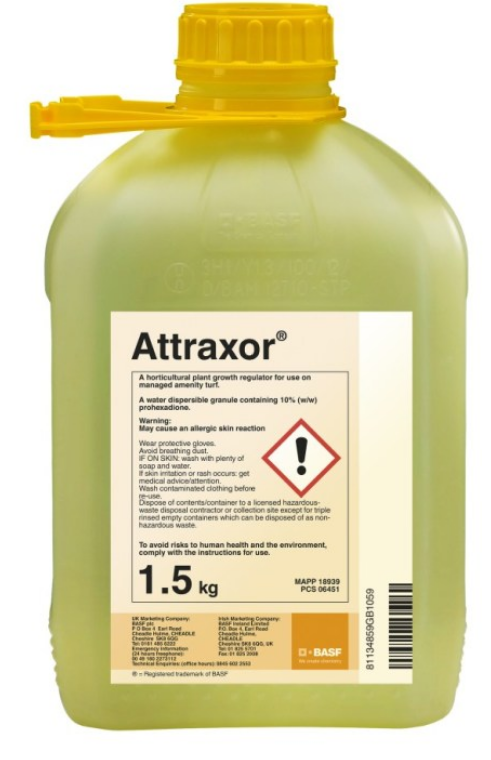
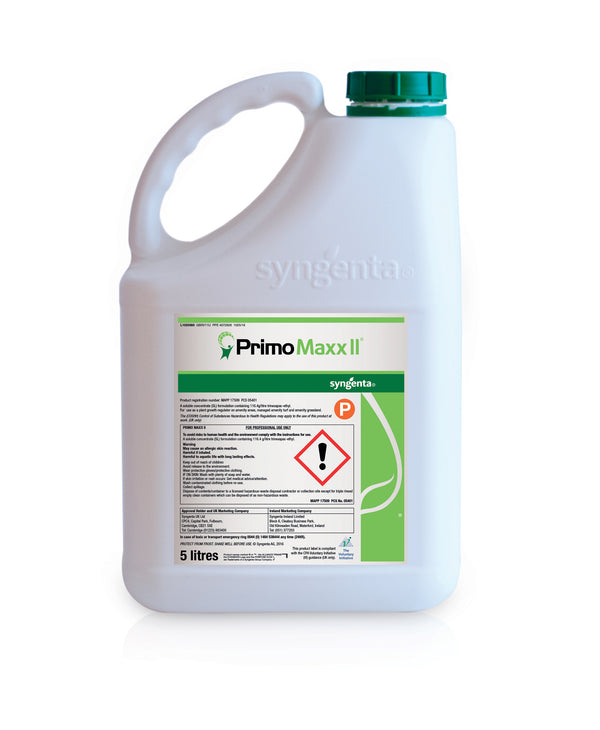
“Managing moisture levels is crucial. We avoid overusing the sprinkler system and hand water the areas which dry out faster. One of the biggest changes to my management has been the implementation of Plant Growth Regulators on our greens and we’re currently using Attraxor and, occasionally, Primo Maxx II from Agrovista Amenity. I play around with the rates depending on climate conditions and plant stress. Finally, preventing shade from trees and allowing natural airflow and light is crucial. We’ve done a fair amount of tree clearance and the results have been instantly noticeable.
Tom Hayward: Bath Golf Club


Related Products