


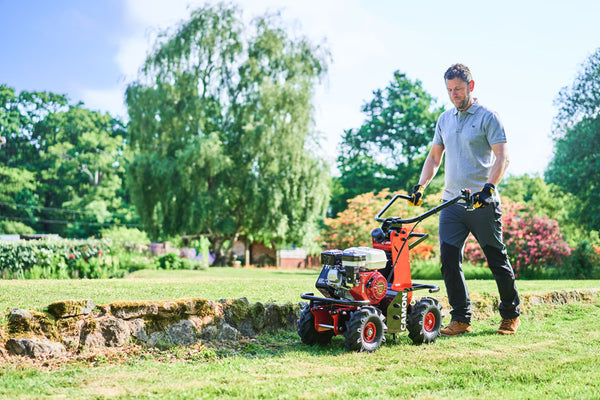
Turfcutter for Fast Surface Repairs and Smarter Turf Renovation
Turfcutter equipment is a practical choice when damaged turf needs removing cleanly and efficiently. On sports pitches, golf courses, school grounds, estates and wider amenity areas, there are times when surface repair needs more than seed and patience. Worn goalmouths, damaged run-ins, contaminated turf, weak edges and badly scarred sections often need cutting out properly before new material goes back in. A good turfcutter helps groundstaff do that with cleaner lines, less waste and better control over the repair.
Across natural turf, the value of a turfcutter is in precision. Rather than tearing at the surface or trying to patch around poor ground, the machine allows you to remove a defined section of turf at a set depth and width. That helps create a cleaner base for replacement work and a more consistent finish once the repair is complete. On high-wear sports sites, that matters because poor patching often shows for weeks afterwards in surface levels, presentation and playability.
From a practical point of view, turfcutter use sits within the wider grounds management programme rather than outside it. It is not a daily machine, but when it is needed, it usually supports important work: local reconstruction, surface reinstatement, edge tidying or preparation for relaying turf. Used well, it can save time, improve accuracy and help a repair blend back into the wider sward more effectively.
Why a turfcutter matters in real-world turfcare
There are plenty of situations where surface damage runs too deep or too unevenly for a light repair. Goal mouths can become unstable, spectator edges can break down, access routes can rut up and badly worn touchlines can lose both cover and level. A turfcutter helps deal with those areas in a more professional way. Instead of scratching at the worst of it, you remove the damaged turf cleanly and create a proper starting point for rebuilding the surface.
That clean removal is important because the quality of the repair depends on the base you leave behind. If the cut is ragged or uneven, new turf sits poorly and the finished patch can sink, dry out or stand proud. A good turfcutter gives you a neater edge, a more consistent lift and a better foundation for whatever comes next. On football, rugby and golf sites in particular, that level of accuracy helps repairs settle in faster and look more natural.
Professional grounds teams usually treat a turfcutter as part of a repair sequence rather than a solution on its own. Once the damaged section has been lifted, the next step may involve refining levels with Loam and Dressing, then reinstating cover with turf or follow-up recovery work using Grass Seed around the edges where the join needs to knit back into the existing sward.
Choosing a turfcutter for the surface and the task
When selecting turfcutter equipment, the first thing to think about is the kind of work you expect it to do. Some sites mainly need localised repair work on sports turf, where control and manoeuvrability matter most. Other venues may use the machine for larger reinstatement jobs, edge work or repeated lifting across bigger areas. In those cases, working width, cutting depth, stability and ease of operation all become more important.
Machine balance and depth control make a big difference in practice. A turfcutter needs to hold a steady cut without wandering, digging unevenly or leaving a messy base behind. On fine turf or presentation-sensitive areas, that matters just as much as outright speed. A machine that is easy to set accurately and simple to handle usually gives a better result than one that feels over-aggressive for the site. Groundstaff tend to get the best value from equipment that suits the scale of their real repair work rather than the biggest job they might only do once.
It also helps to think about the condition of the ground before you cut. Soil that is too wet can smear and lift badly; soil that is too dry can make the cut harsher and less consistent. Recent weather, root depth, thatch level and the strength of the existing turf all affect how cleanly the machine will work. That is why experienced groundspersons rarely send a turfcutter out without first checking the surface condition and thinking through how the repair will be finished afterwards.
Seasonal use through the maintenance year
Turfcutter use tends to be seasonal because the machine is most valuable when repairs can be completed and recovered properly. In spring, it can be useful for cutting out winter damage and preparing local areas for reinstatement as growth begins to return. Through the main playing season, it may be used more selectively where small but important repairs need to be made without disrupting the wider surface. Autumn is often a strong window for more substantial patching and renovation work because moisture conditions are usually better and recovery programmes are already underway. In winter, use becomes more cautious because heavy ground and slower growth can limit how well repaired sections settle back in.
That timing matters because clean cutting is only one part of a successful job. The area still needs to root, level out and blend back into the wider surface. On sites where moisture consistency affects establishment after repair, the same work may also connect with Irrigation and Water Management to help new or reinstated sections bed in more evenly.
How a turfcutter fits into a wider repair programme
No damaged area is improved by cutting alone. The gains come from how the machine fits into the wider repair sequence. A groundsperson may cut out the weak turf, tidy the base, correct levels, replace material and then manage the repaired area carefully through watering, overseeding and mowing-in. If the surface keeps failing in the same place, that often points to a deeper issue rather than simple wear. In those cases, Soil Testing can help build a clearer picture of the profile before the next round of repairs is planned.
On heavily used natural turf, surface repair often links with wider profile work as well. If compaction, sealing or poor water movement are part of the problem, the area may also need support from Aerators or deeper intervention from Aeration Machinery at the right point in the programme. That joined-up approach usually gives a far better long-term result than simply replacing turf and hoping the problem stays away.
Safe handling matters too. A turfcutter is a powered machine working into the surface under load, so setup, transport and operation all need to be controlled sensibly. That is why many teams naturally carry out this kind of work alongside Personal Protective Equipment as part of safer day-to-day machinery use and repair work.


Recently viewed