

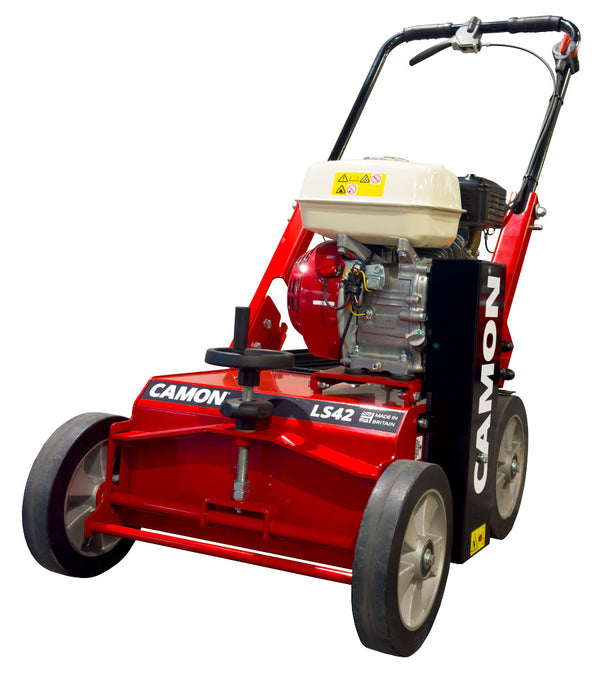

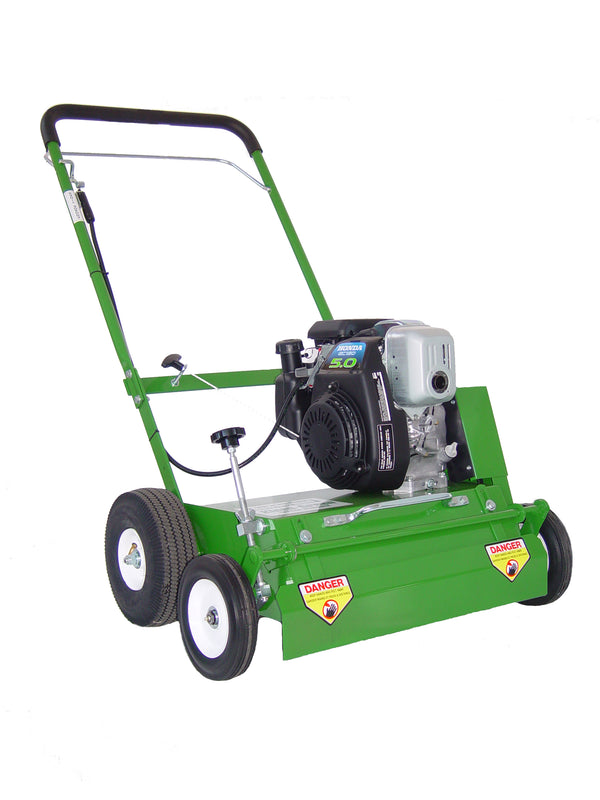
Scarifiers for Cleaner Swards, Better Recovery and Stronger Surface Performance
Scarifiers are a key part of turf maintenance where thatch, lateral growth and surface softness begin to hold the sward back. On sports pitches, golf tees, fairways, fine turf and wider amenity areas, scarifying helps thin out unwanted organic matter, stand the grass up and improve the condition of the upper profile. Used at the right time and with the right intensity, scarifiers support cleaner surfaces, sharper presentation and stronger recovery through the season.
Across natural turf, the real value of scarifying is in what it removes and what it encourages. Excess thatch, dead material and sideways growth can all reduce surface quality if they are left to build. The sward becomes softer, less upright and harder to manage cleanly. Water movement can slow down, mowing quality can slip and seed-to-soil contact becomes more difficult during recovery work. Good scarifying helps open the surface up, reduce that clutter and give the plant a better chance to perform properly.
From a practical point of view, scarifiers sit firmly within integrated turf management. They are not only tidy-up machines. They are part of how groundstaff manage organic matter, improve surface cleanliness and prepare turf for the next stage of the programme. On football and rugby pitches, this can mean removing lateral growth and soft surface fibre before overseeding or topdressing. On golf and fine turf, it may mean refining the sward, improving presentation quality and keeping the top of the profile in better order without causing unnecessary disruption.
Why scarifying matters in real-world turfcare
Thatch and surface fibre build gradually, which means the problem is often easier to feel than to see at first. The surface may seem soft underfoot, hold moisture too near the top or produce a weaker finish after mowing. Ball roll and pace can become less consistent. Recovery may slow down because seed struggles to get into the right place and the plant is spending too much time in a cluttered upper layer. Scarifiers help tackle that by cutting into the surface, lifting material out and leaving the sward more open and upright.
The benefit is not only visual. Good scarifying can help improve airflow around the base of the plant, support cleaner mowing and create better conditions for follow-up work. That is especially useful during renovation and recovery windows, where the aim is to reset the surface and give new growth a better chance. On finer turf, the same principle applies, although the intensity and frequency usually need closer control to avoid overworking the surface.
Professional teams usually get the best results when scarifying is linked to the next step rather than treated as a one-off pass. Once the surface has been cleaned out, it often makes sense to follow with Grass Seed where the sward needs thickening, or Loam and Dressing where the finish needs refining and the upper surface requires support after the clean-out.
Choosing scarifiers for the surface and the job
When selecting scarifiers, the first question should be what you are trying to remove and how aggressively you need to work. Light scarifying may be enough to tidy lateral growth, stand the grass up and freshen the surface before mowing or presentation work. Heavier scarifying is more likely to be used during renovation windows where thatch reduction and deeper clean-out are part of the aim. The right machine depends on the turf type, the amount of material present and how much recovery time the surface has available.
Machine size and format matter as well. Pedestrian scarifiers are often useful on smaller areas, detail work and finer turf where control is important. Larger powered units make more sense on bigger pitches, outfields or amenity areas where work rate matters and the clean-out is more substantial. Blade setup, working depth and collection arrangements all affect the result in practice. A machine that is too aggressive for the surface can do more harm than good; one that is too light may not remove enough material to justify the pass.
Timing also makes a big difference. Scarifying into turf that has no chance to recover is rarely a good idea. Equally, waiting too long can leave the sward carrying more fibre and dead material than it should. Experienced groundspersons usually look at growth rate, moisture status, fixture pressure and the likely follow-up programme before deciding how far to go. That practical judgement is what makes scarifying effective rather than simply disruptive.
Seasonal use through the maintenance year
Scarifiers have value through much of the year, but the main role usually shifts with the season. In spring, lighter work can help freshen the sward, remove winter debris and stand the grass up as growth begins to build. Through the main season, selective scarifying may be used where presentation, cleanliness and lateral growth control matter, particularly on finer turf. Autumn is often the key window for more intensive work because renovation programmes are underway and recovery conditions are usually more favourable. In winter, usage tends to be limited and much more cautious because growth slows and recovery windows become narrower.
That seasonal pattern matters because scarifying is closely tied to plant response. A well-timed pass can improve the surface and support recovery; poor timing can leave the turf open and slow to heal. On sites where the upper profile is also being managed for moisture and infiltration, scarifying often complements Aerators and deeper work from Aeration Machinery, because each operation affects a different part of the surface condition.
How scarifiers fit into a wider renovation programme
No surface improves through scarifying alone. The real gains come from how it fits into a broader sequence of work. A pitch may be scarified to remove fibre, then dressed, overseeded and fed so recovery can begin quickly and evenly. A golf tee may be cleaned out lightly, brushed up and then managed carefully for moisture and wear. A cricket outfield or amenity area may need a firmer reset after the season, with scarifying forming one part of the renovation window rather than the whole answer.
That is why scarifying often sits close to diagnostic and recovery work. If the surface keeps holding moisture, softening or thinning, the issue may not be fibre alone. A closer look through Soil Testing can help build a clearer picture of the upper profile and wider rootzone before the next stage of the programme is planned. If the turf needs support after clean-out, steady nutrition and grow-in may follow, but the main point is that scarifying should open the door to better recovery, not act as a substitute for it.
Operationally, the category also depends on sensible machinery handling and workshop routine. Blades, belts, settings and machine cleanliness all influence the quality of the pass, especially when the aim is consistent work across a whole surface. That is why many teams naturally connect scarifier setup and operation with Personal Protective Equipment as part of safer day-to-day maintenance and machine use.


Recently viewed