
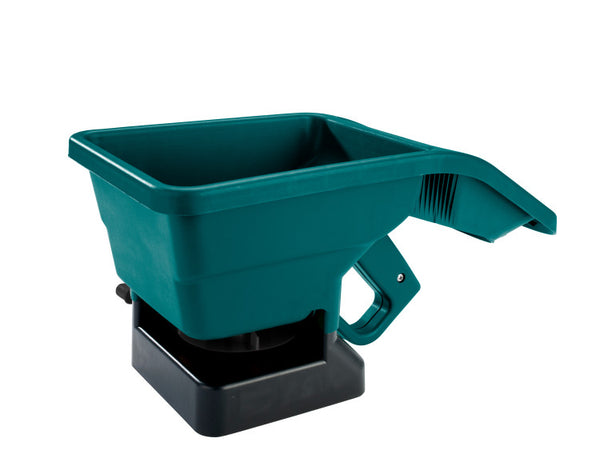
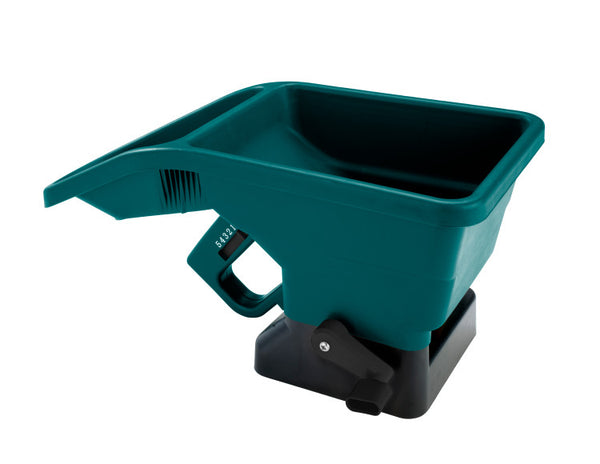


Handheld Spreaders for Quick, Targeted Turf Work
Handheld Spreaders are one of the simplest tools in turfcare, but they still have a clear place in a professional grounds programme. When you need to apply a small amount of granular fertiliser, grass seed, salt or another dry product to a specific area, a handheld spreader gives you speed, control and flexibility. For football, rugby, cricket, golf and wider amenity turf, that makes it a useful bit of kit for localised work where a larger pedestrian machine would be excessive.
On busy sports sites, not every application is a full-pitch job. Sometimes you are touching in a worn goalmouth, feeding a small repair area, overseeding a thin line, or treating a high-wear route that needs a quick response. In those situations, Handheld Spreaders help you move fast without dragging out larger equipment. They are practical, lightweight and easy to store; that is why many experienced groundspersons keep one close at hand throughout the season.
They are also useful where access is awkward. Banks, narrow paths, enclosed corners, small ornamental lawns, perimeter edges and tightly managed areas can all be difficult to cover with a larger spreader. A handheld model lets you get into those spaces more comfortably while still applying product with a more even pattern than hand casting.
Why Handheld Spreaders Still Matter
Control for small-area application
The main advantage of Handheld Spreaders is targeted application. Product sits in a compact hopper and is fed onto a spinning disc or small spreading mechanism, usually controlled by a hand trigger or crank. That allows the operator to meter out granules while walking at a sensible pace. The principle is straightforward; the benefit is that you can react quickly and treat exactly the area that needs attention.
That is especially useful in sports turf maintenance, where wear is rarely spread evenly across the whole surface. High-traffic zones around touchlines, warm-up strips, centre circles, wicket surrounds or golf walk-ons often need local recovery work rather than blanket treatment. A handheld spreader suits that kind of job well, especially when you are applying a light seed dressing or a measured granular feed to encourage recovery.
Used properly, they can support better presentation quality and more efficient product use. Rather than over-applying across an entire area, you can focus on the weak or worn section and keep the rest of the surface on its existing programme. In practical terms, that helps with cost control, grass health and overall consistency across the site.
Not just for seed
Most buyers think first about seed application, and that is a fair starting point. Handheld Spreaders are very handy for overseeding small scars, divot-prone areas and local thinning. But they are also useful for applying mini-granular fertiliser, some granular wetting agents, light soil amendments and winter products such as de-icing salt on suitable hard surfaces around sports facilities. Their value comes from flexibility rather than capacity.
That said, product choice matters. Fine seed, coated seed, mini-granules and larger conventional granules all flow differently. A spreader that handles one material neatly may not be quite as tidy with another. It is always worth checking the aperture range, spread pattern and the physical size of the material before relying on it for a precise job.
Choosing the Right Handheld Spreader
Start by thinking about what you apply most often. If your main aim is patch seeding, look for a unit with a smooth flow adjustment and a comfortable grip, so you can meter out product without jerking the trigger or overfeeding the area. If you want a spreader for dry nutrition or salt use as well, build quality becomes more important. Corrosion resistance, a sturdy hopper and a reliable shut-off mechanism will all help the machine last longer.
Comfort matters more than people expect. A handheld spreader is designed for smaller jobs, but repeated use still puts strain on the wrist, forearm and shoulder. A well-balanced unit with a sensible handle shape makes a big difference during a full day of touch-up work. It also helps with consistency, because operators are more likely to keep a steady walking pace and cleaner spread pattern if the tool feels stable in the hand.
Capacity is another point to weigh up. A small hopper is easier to carry and ideal for precise work on compact areas. A larger hopper reduces refill stops but can become tiring if used for longer periods. As with most turf equipment, the best option depends on the size of your site, the frequency of use and whether the tool is meant for occasional touch-up work or regular day-to-day tasks.
Look closely at spread-width control as well. In tight areas, a broad pattern can create waste on paths, surrounds and non-target surfaces. A more controlled spread is often better for precision work, especially near fencing, hard edges, covers and ornamental borders. The goal is not just to get product out of the hopper; it is to place it where it will actually contribute to recovery, density and surface performance.
How Handheld Spreaders Fit into the Season
Handheld Spreaders are useful through most of the year because they support responsive, localised work. In spring, they come into their own for small overseeding jobs and light granular feeding as growth returns. In summer, they are handy for patch repairs, targeted nutrition and supporting recovery in high-wear areas when fixture pressure is high. In autumn, they remain useful during renovation and tidy-up work, especially where small zones need extra seed or local treatment. In winter, their role often shifts towards occasional hard-surface work or selective dry applications on suitable sites.
That seasonal value makes them more than a casual add-on. They are a simple tool that supports day-to-day turf management when larger machines are unnecessary or inefficient. On many sites, it is exactly that kind of practical flexibility that keeps standards up across a long season.
Professional insight from the turf side
In real grounds management, a lot of quality comes from how well you deal with the small areas, not just the main field operations. A pitch can be well fed overall and still look poor if the worn entrances, goalmouth edges or thin touchline bands are left behind. Handheld Spreaders help you close that gap. They allow quick, measured follow-up work without disrupting the wider programme.
They also fit naturally into integrated turf management. You might seed a worn strip after surface preparation, then use Broadcast Spreaders for larger granular applications across the wider area, while Handheld Spreaders deal with the tighter follow-up work. On programmes that combine dry and liquid inputs, they also sit neatly alongside Pedestrian Sprayers. That kind of joined-up approach is what separates tidy maintenance from reactive patching. Timing, product choice and accuracy still matter, even on a small area.
Handheld Spreaders are useful and easy to keep in regular use across sports turf, estates and managed amenity grass. Choose one that suits your main product types, keep the settings sensible and use it where precision matters most; you will usually see the benefit quickly in cleaner recovery, smarter presentation and better control over small-area applications.
Recently viewed