


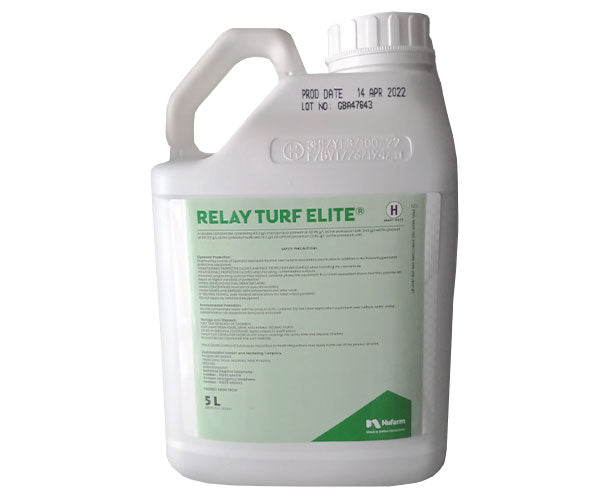
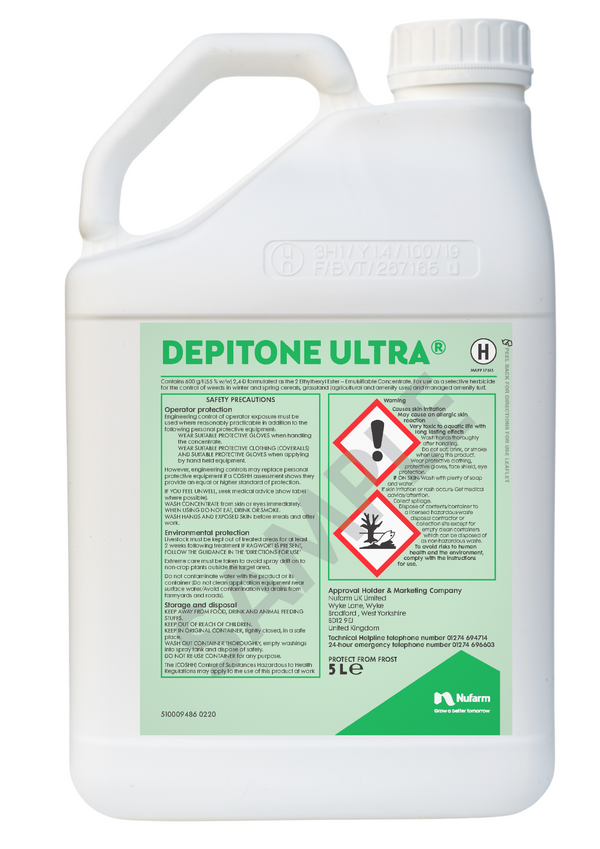
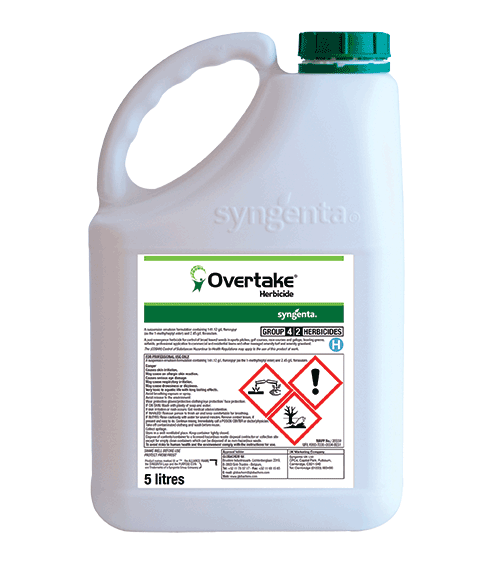
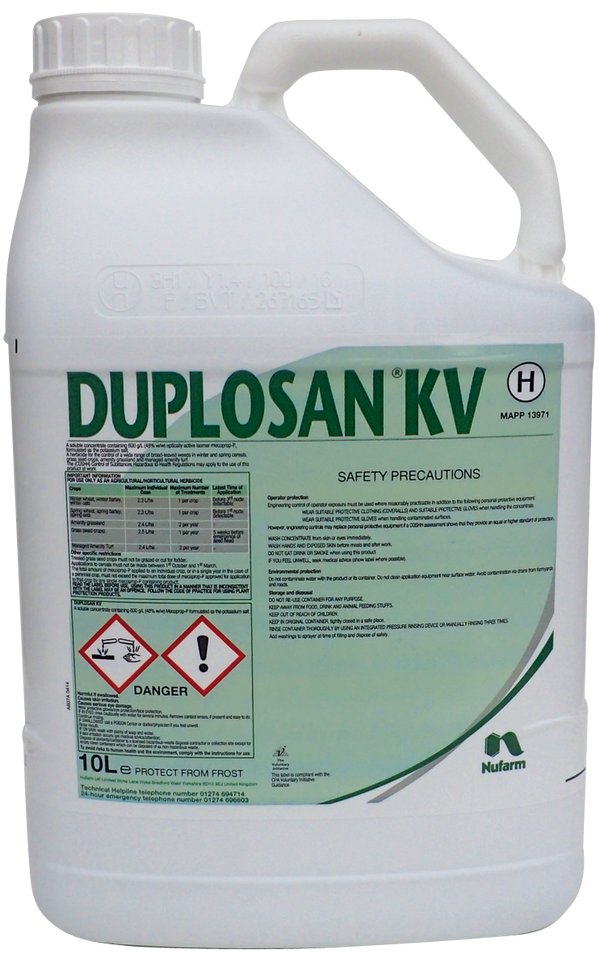
Professional selective turf weed killer for targeted broad-leaved weed control
Professional selective turf weed killer products are designed to control broad-leaved weeds in established grass without removing the turf itself. That makes them an essential part of sports turf, amenity grass and managed lawn maintenance where presentation, surface quality and grass density all matter. On football pitches, rugby surfaces, golf roughs, cricket outfields, school grounds and ornamental lawns, selective herbicides help reduce weed competition while allowing the sward to remain intact and performing properly.
In practical turfcare terms, that matters because weeds do far more than affect appearance. Clover, daisies, dandelions, plantain and similar species compete with the grass plant for moisture, nutrition and light. As weed pressure builds, surface uniformity drops and the sward becomes less consistent. Professional selective turf weed killer products help reverse that balance by targeting unwanted broad-leaved weeds while preserving the established grass cover that needs to recover and fill the space.
For users comparing options across a broader herbicide programme, it is also useful to explore Weed Killer & Controls and Weed Killer, where selective products sit alongside total, residual and specialist weed control solutions for different surfaces and situations.
How professional selective turf weed killer works
A professional selective turf weed killer is formulated to affect susceptible weed species while leaving established grasses largely unaffected when applied correctly. That selectivity is what makes these products so valuable in turf management. Rather than stripping back all vegetation, they allow the groundsperson or lawn manager to remove broad-leaved weeds without creating bare ground that then needs major re-establishment work.
In practice, performance depends on timing, active growth and good application standards. Weeds need enough leaf area to take in the spray, and the grass should not be under obvious stress from drought, disease or severe wear. Even coverage, the correct dose and sensible weather judgement all influence the result. Where application accuracy matters, suitable sprayers and accessories from Equipment can help improve consistency across larger or more detailed treatment areas.
Where selective weed control fits in a turfcare programme
Professional selective turf weed killer is most effective when it forms part of a wider maintenance plan rather than being used as a one-off reaction. Weeds usually establish where the sward is open, weak or under stress. If the grass is thin, underfed or struggling with moisture movement, removing the weed alone will not fully solve the underlying issue. The best results come when selective herbicide use is followed by practical steps that help the turf occupy the space again.
That is why selective weed control often links naturally with Fertiliser, especially where treated turf needs support to recover strongly and regain density. On surfaces that dry unevenly or struggle with moisture distribution, Wetting Agents can also support more consistent growing conditions. If the sward is thin after weed removal or repair work is needed, overseeding with products from Grass Seed can help strengthen the surface and reduce the opportunity for reinfestation.
Why stronger turf reduces future weed pressure
One of the key principles in grounds management is that weeds exploit weakness. Thin grass, poor nutrient status, shallow rooting, compaction and inconsistent mowing all create opportunities for broad-leaved weeds to invade. A selective herbicide can remove the visible problem, but long-term improvement depends on building a denser, more competitive sward afterwards.
That is why professional selective turf weed killer should be seen as one part of integrated turf management. It creates the opportunity for better turf performance, but the wider programme secures the gain. When nutrition, moisture management and surface recovery are aligned properly, the grass is far better able to resist future weed encroachment.
Seasonal timing and practical application
Timing has a major influence on the performance of professional selective turf weed killer. Spring and early summer are often key treatment windows because weeds are actively growing and the grass is moving well enough to recover after treatment. Mid-season applications can also work well where growth remains active and the surface is in good enough condition to respond. Late summer can still be effective, but results will always depend on weather, weed activity and the overall state of the sward.
Selective herbicides are generally most useful when weeds are actively taking up the spray and not sitting dormant or heavily stressed. That is why well-timed applications usually outperform reactive spraying carried out simply because the weeds are visible. A more planned approach gives cleaner results and makes it easier to integrate herbicide work with mowing, feeding and fixture preparation.
Professional use means matching product to surface
Different turf situations call for different approaches. A high-quality sports surface, a fine lawn and a mixed amenity area may all require selective weed control, but the weed spectrum, grass density and timing pressures can vary significantly. Some surfaces need spot treatment, while others need a more complete programme. That is where browsing wider collections such as Weed Killer & Controls becomes useful, especially for users comparing selective herbicides with other control measures across a full site-management plan.
It is also important to remember what selective herbicides are not for. They are not a substitute for complete vegetation removal on hard surfaces, and they are not the right tool where the aim is total clearance. Their value lies in preserving the turf while removing unwanted broad-leaved weeds. Used in the correct setting, they help maintain cleaner, more uniform and more competitive grassed surfaces.
Selective weed control as part of long-term surface improvement
The real value of professional selective turf weed killer is that it supports better grass, not just fewer weeds. On managed turf, the goal is always a stronger, more resilient and more consistent surface. By reducing competition from broad-leaved weeds, selective herbicides help the sward use available resources more effectively and recover into cleaner ground.
That is why the strongest results come when selective weed control is followed by sensible aftercare. Support the grass with the right products from Fertiliser, maintain even moisture with help from Wetting Agents, and restore density where needed through Lawn Grass Seed. Backed by sound application practice and the right kit from Equipment, professional selective turf weed killer becomes part of a much more effective turfcare strategy.
Used thoughtfully, these products help protect the quality of lawns, sports turf and amenity grass by controlling broad-leaved weeds without sacrificing the grass surface itself. That makes them an important tool for grounds teams, contractors and lawn professionals who want cleaner turf and stronger long-term performance.
Recently viewed