


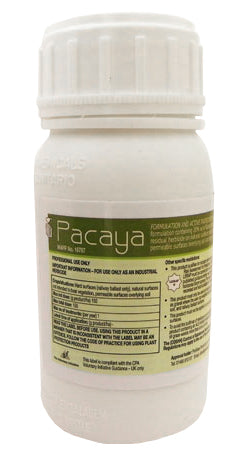


Residual long lasting weed killer for extended control on managed sites
Residual long lasting weed killer products are chosen when you need more than a quick knockdown of visible growth. In turfcare and grounds management, they are used to keep hard surfaces, perimeter areas and non-play zones cleaner for longer by combining contact or systemic activity with a residual barrier in the surface. That makes them especially useful on paths, gravel, service yards, compound edges, around buildings and along fenced boundaries where repeat germination is a persistent problem. On busy sports venues, schools, estates and amenity sites, that longer period of control can reduce labour demand and help maintain a tidier, safer presentation standard.
The key difference is persistence. A standard non-selective herbicide may remove what is actively growing at the time of spraying, but a residual long lasting weed killer is designed to keep working in the treated zone for a period afterwards. That matters where you are trying to suppress fresh flushes of annual weeds and reduce the need for repeated visits. Used correctly, residual weed killer treatments can support a more efficient grounds management programme and free up time for other priorities such as mowing, renovation planning and in-season presentation work.
How residual activity works in practice
A residual long lasting weed killer usually works in two stages. First, it controls emerged weeds through foliar uptake or direct contact. Second, the residual component remains in the upper surface layer and affects germinating seedlings as they emerge. In practical terms, that means application timing, surface condition and weed size all matter. If the target area is already carrying heavy, mature growth, you still need good coverage to achieve an effective initial clean-up. If you are treating a hard surface or gravel area with a history of repeated germination, the residual element is what helps extend the interval before the next flush appears.
That is why product choice should be matched to the site rather than treated as a generic weed-control decision. Residual herbicide performance is shaped by surface type, rainfall, organic matter, traffic and the species you are trying to suppress. On compacted gravel and hard standings, residual performance may be very useful. In areas where runoff, adjacent planting or desirable grass are close by, extra care is needed. Operators should always follow the product label, consider buffer zones and complete Control of Substances Hazardous to Health assessments before use.
Where residual weed control fits in a professional programme
Residual long lasting weed killer products have a clear role in integrated turf management, but they are not for routine use across desirable grass. Their place is around the managed surface rather than in it: perimeter paths, spectator routes, machinery yards, storage areas, around dugouts, behind goals, compound margins and other non-crop zones where vegetation needs to be suppressed for a longer period. On a football or rugby site, that means we can keep operational spaces clean while protecting time and budget for the areas where grass quality is the real priority.
In a complete maintenance programme, residual weed control often sits alongside Weed Killer, Weed Killer & Controls and Equipment. That reflects real practice. We may use a residual long lasting weed killer on perimeter zones, use other products from Weed Killer where a different mode of action is needed, and rely on suitable sprayers and application kit from Equipment to deliver even coverage and accurate dose. On mixed sites where grassed areas also need selective broad-leaved weed control, Selective Turf Weed Killer can sit alongside that programme without confusing the role of each treatment.
Professional insight: longer control only works when the site is prepared properly
One of the biggest practical mistakes with residual long lasting weed killer is applying it onto a surface that has not been prepared well enough. If there is heavy debris, thick moss, dense mature growth or obvious shielding from leaf litter, the spray will not reach the target evenly and the residual layer will be inconsistent. On sports compounds and estate paths, a clean, accessible surface gives much better results. We see the best outcomes when the area is treated as part of a proper workflow: identify the target species, clear excessive debris, spray in suitable conditions, then monitor regrowth rather than waiting for the site to become untidy again.
That professional approach is what separates planned weed management from reactive spraying. Residual herbicide use should reduce repeat labour, not create false confidence. If the wrong area is treated, if drift reaches ornamental beds, or if traffic and runoff are ignored, you create more problems than you solve.
Seasonal timing for residual long lasting weed killer
Seasonality matters with residual long lasting weed killer because both current weed growth and future germination patterns influence results. Spring is often a strong timing window on hard surfaces and compounds because emerged weeds are actively growing and fresh germination pressure is starting to build. Early summer can also be effective where you want a clean period through the busiest part of the playing or maintenance season. On some sites, late summer and early autumn are valuable timings too, especially where you are trying to tidy paths, yard edges and perimeter areas before winter and suppress the next flush of seedlings.
Winter use can be more limited. Where plant growth is slow and uptake is poor, the immediate knockdown element may be less reliable. Residual performance can still have value in the right conditions, but it should not be treated as a universal winter fix. As always, the label, soil or surface conditions, rainfall pattern and the target species should guide decisions.
Choosing the right related products after treatment
Residual weed control is often one part of a broader site-improvement plan. Once perimeter and non-play areas are under control, attention usually returns to the surfaces that carry the venue: pitches, lawns, outfields and other managed turf. That is where linked collections such as Fertiliser, Wetting Agents, Lawn Grass Seed and Loam & Dressing come into play naturally. After all, a tidy compound or path network is only part of the picture. We still need strong grass health, recovery from wear, stable moisture management and sound renovation inputs if the whole site is to perform well.
That is why residual long lasting weed killer should be seen as a specialist tool rather than a catch-all answer. It is highly effective in the right place: hard surfaces, gravel, margins and operational zones where extended suppression is useful. It is not a substitute for selective turf herbicide work, and it should not be used where desirable grass or ornamental planting needs to remain untouched. Used with care, though, residual long lasting weed killer can improve presentation quality, reduce repeat labour and help keep professional sites cleaner for longer.


Recently viewed