
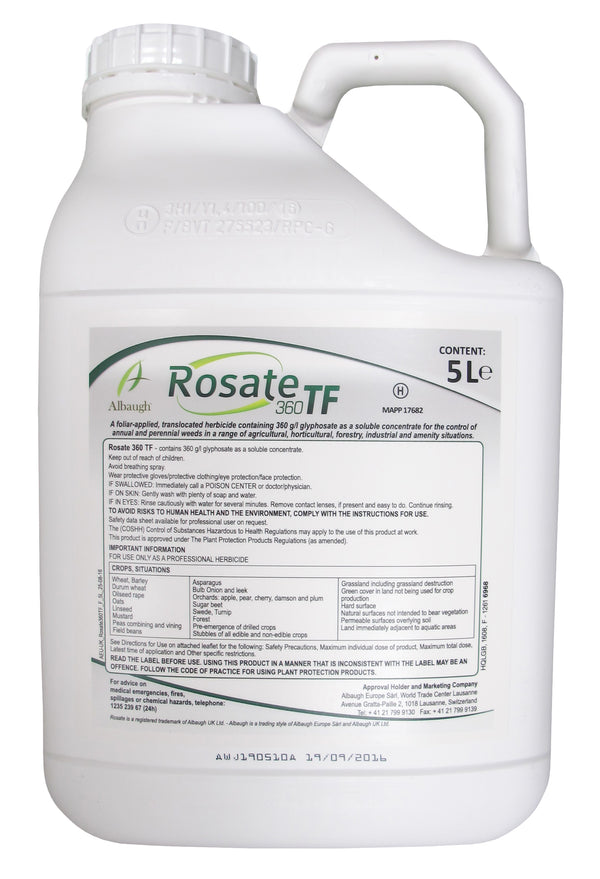


Rosate weed killer for professional total vegetation control
Rosate is a trusted choice when you need fast, reliable total weed control on amenity sites, hard surfaces and non-crop areas. On this page, the focus is Rosate 360 TF: a glyphosate herbicide with 360 g/L of active substance, designed for the control of annual and perennial weeds in amenity, industrial, horticultural and similar situations. Pitchcare’s own collection describes Rosate as a professional total weed control option for amenity, landscape and hard surface areas; the current product range on the collection is built around Rosate 360 TF glyphosate formulations.
That matters because Rosate is a non-selective weed killer. In simple terms, it does not pick out broadleaf weeds while leaving turf behind. Instead, it is used where you want a full knockdown of unwanted vegetation before renovation, around fence lines, on paths, in yards, around storage compounds and on other surfaces where clean presentation and safe access matter. For sports grounds and managed landscapes, that makes it very different from a selective turf herbicide. If you are treating weeds in a live sward, you would usually look at Professional Selective Turf Weed Killer instead; if you are clearing vegetation before reseeding or surface works, Rosate is the more logical fit.
How Rosate 360 TF works in practice
Rosate 360 TF is a foliar-applied, translocated herbicide. That means the spray lands on active green leaf, then moves through the plant into roots, rhizomes and stolons. This is why glyphosate remains such an important tool for grounds teams: you are not just scorching top growth, you are aiming to stop regrowth from below ground as well. The product label states that annual and perennial grasses, along with most broad-leaved weeds, are controlled when the target is actively growing. Annual weeds should have enough leaf on them for uptake, while perennial weeds are best treated when they are pushing fresh, vigorous growth.
From a turfcare point of view, this makes Rosate especially useful before overseeding, before a full surface renovation or when reclaiming neglected edges and surrounds. It can also support weed control on hard standings, gravel margins and natural surfaces not intended to bear vegetation. Pitchcare’s wider weed killer category also places glyphosate products in that non-selective role for hard surfaces, pathways, fence lines and pre-renovation clearance.
Application, safety and choosing the right setup
When you are choosing a Rosate product, think first about area size, weed pressure and application method. A 1 L pack can make sense for smaller jobs or spot treatment; 5 L and 20 L options are better suited to regular amenity work, larger compounds or contract spraying. The label identifies Rosate 360 TF as a soluble concentrate and a Group 9 herbicide. In day-to-day terms, that means you need accurate mixing, clean spray equipment and a calm application window so the spray lands where it should.
Professional standards matter here. The Rosate label requires suitable protective clothing and gloves when handling the concentrate, with extra protection including rubber boots when using hand-held sprayers. It also states: do not contaminate water; do not clean equipment near surface water; and keep livestock out of treated areas. The current safety data sheet also references Control of Substances Hazardous to Health regulations, so a proper COSHH assessment, secure storage and sound operator practice should be part of the job. For many users, that means pairing herbicide work with the right Knapsacks, Sprayers & Equipment and PPE & Safety rather than treating spraying as an afterthought.
Seasonal timing for better results
Season matters with glyphosate. In spring and early summer, Rosate is useful where weeds are actively growing and you need a clean start before repairs, reseeding or broader site tidy-ups. Through the main growing season, it fits routine amenity and hard-surface weed control, provided you work around play, pedestrian traffic and drift risk. In autumn, it is often used for post-season clearance, fence-line work and pre-renovation preparation. Winter use is more limited because performance drops when weeds are stressed by frost, waterlogging or poor growth; the label is clear that active growth is important, and frosty conditions should be avoided. Pitchcare’s collection also filters Rosate for spring, summer and autumn use rather than winter.
Where Rosate fits in a complete grounds-maintenance programme
Good grounds management is never about one product on its own. A typical programme might start with total weed clearance using Rosate where old vegetation, volunteer growth or problem weeds need removing ahead of works. From there, you might move into Plant & Soil Health inputs to support recovery, choose suitable Grass Seed for your sport or usage pattern, then follow with Fertiliser to drive establishment. Once the surface is back in play, Line Marking and Line Marking Machines keep presentation sharp, while Loam & Dressing supports levels, surface stability and renovation detail. On larger sites, Irrigation and Machinery also come into the picture so each stage of the programme works together rather than in isolation.
That joined-up thinking is a big part of integrated turf management. We are often balancing weed pressure, surface quality, fixture demands and presentation standards all at once. On a football or rugby site, for example, Rosate may be used off the main sward on hard standings, perimeter areas and pre-renovation zones, while the playable grassed area is managed with a completely different weed control approach. On paddocks, estate ground and serious domestic lawns, the principle is the same: choose a total herbicide only where you genuinely want everything green growth-related removed.
Professional insight: what Rosate is good at, and what it is not
The strength of Rosate is broad, reliable non-selective control across a wide target range, including many annual weeds, perennial grasses and broad-leaved weeds. It is especially useful when tidy edges, clean hard surfaces and renovation prep are the job in front of you. It is not there to feed turf, improve soil structure or selectively clean weeds from an established sports pitch. It is also not a magic answer in every case: the label notes that horsetail does not receive acceptable control, and stressed weeds are less susceptible. That is why product choice, dose rate, water volume, spray quality and timing all matter so much.
Used well, Rosate gives groundspersons and contractors a practical, professional route to cleaner surfaces and better site preparation. Pitchcare is well placed to support that process, not just with Rosate weed killer itself, but with the wider products and advice that turn a spray job into a proper maintenance plan. For more category context, it is also worth browsing Weed Killer & Controls and the Pitchcare Magazine alongside this collection.
Recently viewed