

Why tank cleaner matters in professional turfcare
A reliable tank cleaner is a small part of the spraying programme, but it has a big effect on accuracy, safety and consistency. On sports turf, we often switch between herbicides, liquid feeds, wetting agents, pigments and line marking products through the season. If the tank, boom, filters, induction hopper and nozzle set are not cleaned properly between jobs, residues can carry over into the next application. That can affect product performance; it can also create avoidable risk on fine turf, outfields and ornamental areas.
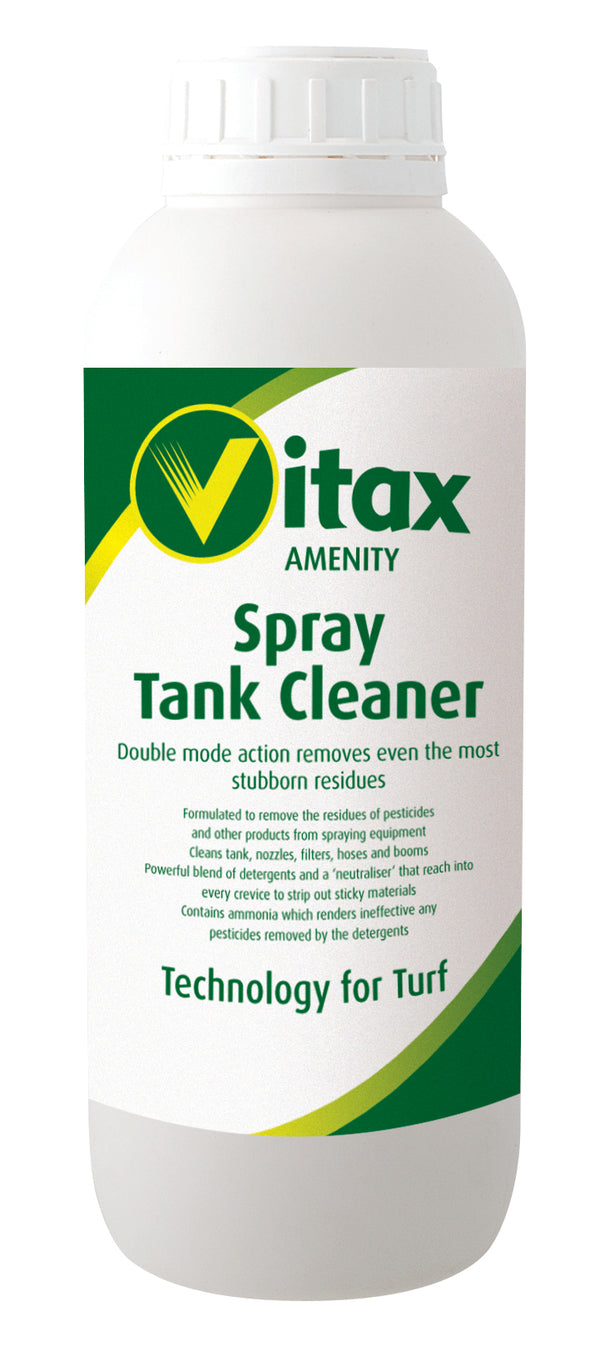
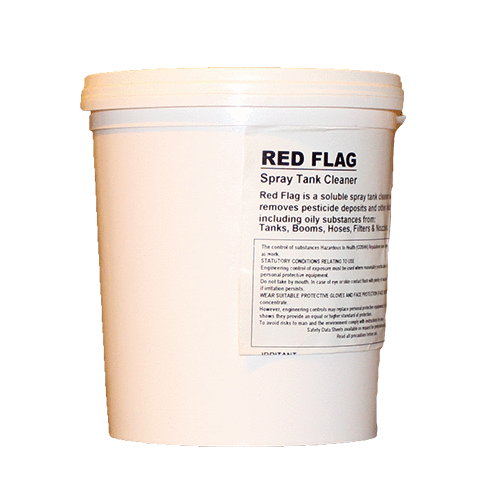
That is why sprayer cleaner products deserve proper attention. A good sprayer tank cleaner helps break down herbicide residues, pesticide traces, fertiliser salts and oily deposits that cling to tanks, pipework and nozzles. It also helps reduce contamination when you move from one job to the next. For a groundsperson, greenkeeper or contractor, that means better application accuracy, less downtime and more confidence when treating valuable playing surfaces.
On busy football, rugby and cricket sites, spraying equipment is often used hard. One day you may be applying Weed Killer; the next day it could be a foliar feed from Liquid Turf Fertiliser, then a wetter from Wetting Agents. Without a proper clean-out routine, cross-contamination is always a possibility. That is especially important where presentation quality, grass health and even cover across the surface are under close scrutiny.
How spray tank cleaners and defoamers work
Breaking down residues and protecting spray quality
A professional tank cleaner is designed to loosen and lift deposits from the inside of the sprayer system. Depending on the formulation, it may target dried chemical films, staining, sediment and stubborn residues left after repeated spraying. This matters because tiny traces left in the system can still affect the next application, especially on sensitive turf areas or when moving from total weed control work back to managed amenity or sports turf.
Spray tank cleaners are also useful for routine machine care. Cleaner tanks, strainers and nozzles usually mean fewer blockages, better spray pattern consistency and easier calibration. In practice, that supports a more dependable grounds management programme. It also helps keep older knapsacks and pedestrian units working properly for longer, which is no bad thing when budgets are tight.
Why defoamers have a place too
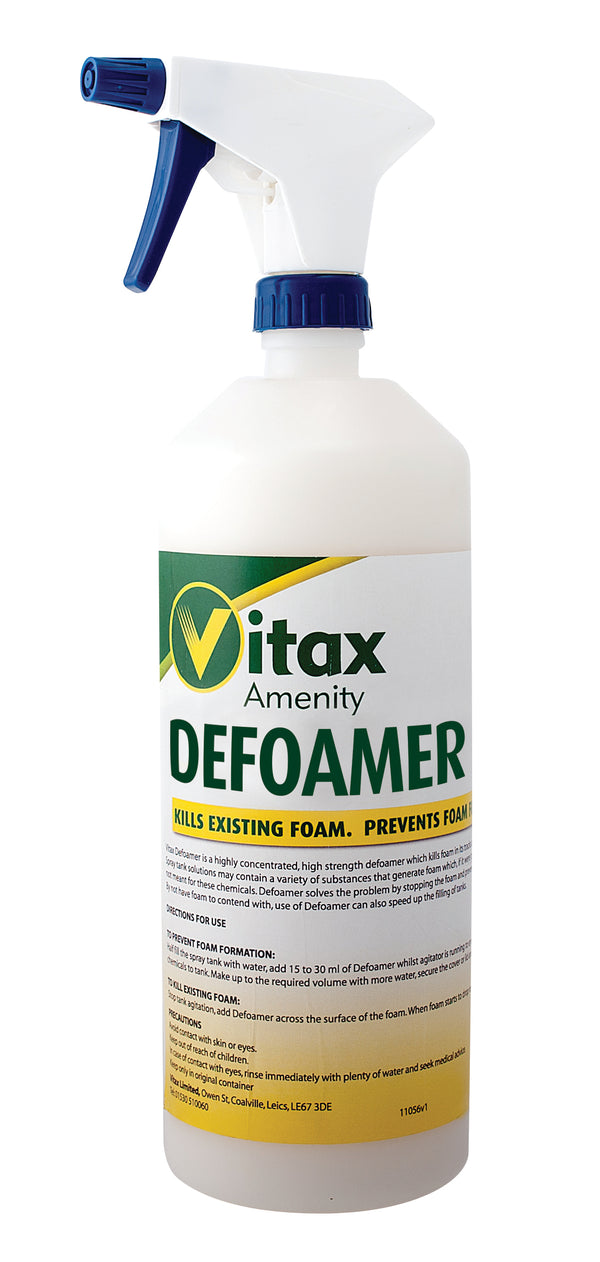
Foam is another common issue, particularly where agitation is high or products are being mixed quickly in the middle of a busy working day. Excess foam can slow filling, make it harder to see true tank volume and increase the chance of messy spills around the filling point. That is where defoamers come in. Used correctly, they reduce foam during mixing and rinsing, making refills quicker and cleaner.
For teams running compact and pedestrian sprayers, or larger amenity units, this is practical rather than glamorous kit. It keeps work moving and supports safe handling. When paired with the right Knapsacks, Sprayers & Equipment and spare parts from Spraying Accessories, a sprayer tank cleaner becomes part of good housekeeping rather than an afterthought.
Using tank cleaner within a real maintenance programme
In day-to-day turf work, a tank cleaner fits into the same disciplined approach as calibration, record keeping and nozzle checks. After a selective herbicide treatment, we want the machine flushed and neutralised before the next feed or plant health job. After applying marker concentrate or a spray dye, we want the lines, seals and jets rinsed before product dries in the system. On golf, football and cricket sites alike, that attention to detail supports integrated turf management and protects surface quality.
A realistic workflow often looks like this: apply the chosen product at the correct application rate; rinse down while residues are still fresh; circulate the cleaner through the full system; flush booms, hoses and nozzles; then inspect wear parts before storage. That routine sits neatly alongside other essentials such as Spray Dyes & Adjuvants for spray accuracy and Line Marking Machines where the same discipline is needed to keep marking equipment clean, reliable and ready for the next fixture.
There is also a clear safety angle. Chemical handling is part of professional grounds care, so clean-out and disposal need to be managed properly under site rules and Control of Substances Hazardous to Health (COSHH). Suitable kit from Personal Protective Equipment, secure storage from Chemical Storage & Signage and emergency preparation with Spill Kits all support safer, tidier spray operations.
Choosing the right tank cleaner for your operation
What to look for before you buy
Not every site needs the same approach. A school or local authority team using a knapsack for spot treatment may want a straightforward spray tank cleaner that is quick to measure and easy to rinse out. A contractor managing multiple surfaces may prioritise stronger residue removal, defoaming performance and compatibility across different tank materials and seals. It is worth checking pack size, dilution guidance, contact time and whether the product is intended for routine rinsing or deeper periodic cleaning.
Think about what you spray most often. If you regularly switch between herbicides, liquid nutrition, biostimulants and marker products, a sprayer cleaner with broad residue-removal capability makes sense. If foam is your main frustration, a dedicated defoamer may be the better addition. For line marking teams, a sprayer tank cleaner that can also help keep spray markers and transfer systems free from build-up is especially useful.
Seasonally, tank cleaning has value all year round. In spring and summer, spraying frequency often rises as growth starts, weeds move and presentation standards tighten. During the playing season, fast clean-outs help teams work around fixture schedules with less disruption. In autumn and winter, a proper wash-down before storage or before switching product types helps protect pumps, hoses and nozzles from residue build-up and neglect.
Used well, tank cleaners help you get more from the products you apply and the machines you rely on. They support cleaner changeovers, better grass health outcomes and more dependable equipment performance. For professional sports turf, that is exactly the sort of detail that separates a rushed job from a well-run operation.
Recently viewed