Turf Disease Articles


Weed threat looms after summer turf cover loss
15 July 2026

Beating heat stress this summer
10 July 2026
Latest Articles


Rebuilding a green, reviving a club at Berkhamsted Bowls Club
19 October 2026
Plan for autumn disease before it starts!
Autumn disease management starts in summer. Here, we explore why stadium turf managers need a plan before symptoms appear!

Every stadium grounds manager knows the feeling.
The pitch comes through summer having established well and looking strong. Coverage is good, wear is minimal, and the surface is performing well despite the demands of play. Then September arrives. Dew lingers longer into the morning, nights become cooler, humidity rises. With moisture being a key driver in the development of autumn diseases, suddenly the risk of disease becomes real.
What makes autumn disease management particularly challenging is that by the time symptoms are visible, the conditions that favour disease have often been building for weeks. For stadium environments, where airflow is restricted, shade is unavoidable, and surface moisture is often persistent; waiting until symptoms appear can leave managers reacting rather than managing proactively. As we move through July, now is the time to start planning how disease pressure will be managed throughout late summer, autumn and into winter.
Why stadium pitches are different
Disease management principles are broadly the same across all turf surfaces, but stadiums present a unique set of challenges. Many modern stadiums now rely on supplementary lighting, carefully managed irrigation and overseeding programmes to maintain year‑round performance. While these practices are essential, they can also create humid microclimates and prolonged periods of leaf wetness. Disease pressure is therefore rarely uniform, with shaded, cooler areas often becoming hotspots for infection. At the same time, elite playing surfaces are expected to maintain consistent density, colour and performance under intense scrutiny.

Which diseases are most likely to cause problems?
- Leaf spot (above) commonly develops where turf is under stress or experiencing fluctuations in moisture and nutrition.
- Brown patch (below) remains a significant threat during periods of high humidity and warm overnight temperatures, especially on intensively managed sand‑based surfaces.
- Grey leaf spot continues to be a concern in perennial ryegrass‑dominated stadium pitches.
Although these diseases differ in their biology and timing, they share a common characteristic: they exploit periods when environmental conditions favour infection and plant recovery is becoming increasingly constrained.

Understanding the autumn disease window
Disease outbreaks rarely occur because of a single factor. Instead, they emerge when three components align:
- A susceptible host
- A viable pathogen
- Environmental conditions that favour infection
As autumn approaches, it is the environment which begins moving in the pathogen’s favour. Disease pressure often increases at the same time as turf recovery begins to slow. As day length shortens and light levels decline, photosynthetic output reduces, and growth rates gradually fall. Evapotranspiration decreases, resulting in longer periods of leaf wetness and increased humidity. A small amount of disease damage that might grow out quickly in August can remain visible for weeks later in the autumn. In practical terms, autumn disease management is not solely about preventing infection but also about protecting recovery capacity.
Why cultural controls alone may not be enough
Good disease management always begins with sound agronomy. Air movement should be maximised wherever possible. Irrigation should be carefully managed. Nutritional programmes should support plant health without encouraging excessively soft growth. Dew removal remains one of the most effective and economical disease management tools available.
However, groundspeople often operate within constraints that cannot be fully controlled. The stadium structure may restrict airflow. Shade may be unavoidable. Fixture schedules may limit maintenance opportunities. In these situations, cultural controls remain essential but may not provide sufficient protection during periods of elevated disease pressure.

The value of planning ahead
One of the most common mistakes in disease management is treating fungicides as rescue treatments. By the time symptoms become obvious, infection has often been active for some time. Preventative strategies aim to protect plant health before significant damage occurs. Planning fungicide applications in advance allows products to be selected according to expected disease pressure, environmental conditions and seasonal timing rather than reacting under pressure.
Building a seasonal defence strategy
An effective disease management programme should reflect how disease pressure changes through the season. Different pathogens dominate at different times, and no single fungicide provides the ideal solution for every situation.
The Syngenta AIM programme has been developed around this principle. Rather than focusing on a single disease or treatment window, it combines three fungicides applied sequentially to provide protection across the changing disease pressures encountered from late summer into winter.
Planning fungicide applications in advance allows products to be selected according to expected disease pressure, environmental conditions and seasonal timing rather than reacting under pressure.
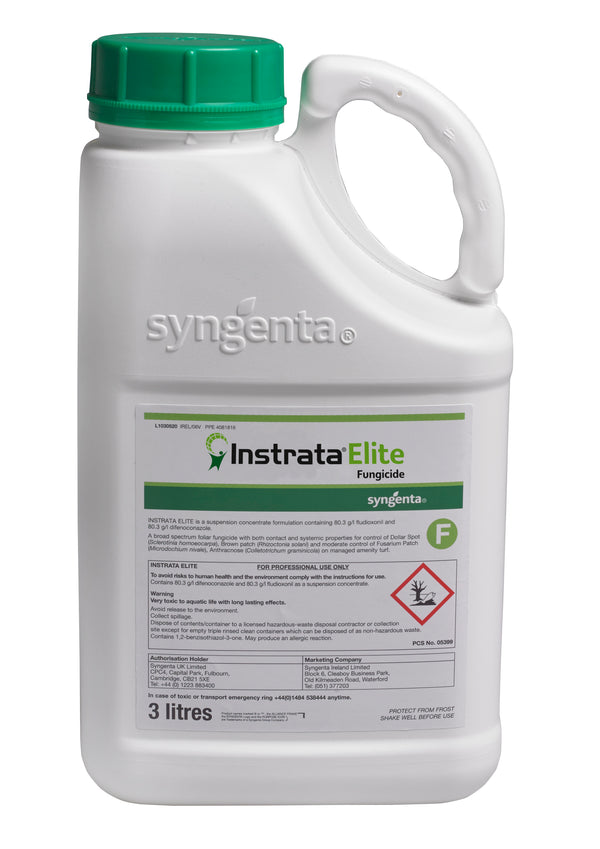
Ascernity provides broad‑spectrum protection during periods when diseases such as brown patch and leaf spot become active. As conditions evolve through autumn and growth slows, Instrata Elite provides further protection across a wide disease spectrum. Medallion TL then offers an option to reduce disease spores as conditions move towards the cooler, wetter periods associated with winter disease pressure. The use of different active ingredients and modes of action supports resistance management principles and helps maintain long‑term efficacy.

Disease management is ultimately about preserving performance
For grounds teams, the real objective is maintaining a surface that performs consistently. Every disease outbreak has consequences beyond the visible symptoms. As fixture schedules intensify through autumn and winter, opportunities for recovery become increasingly limited. That is why disease management should not begin when disease appears. It should begin when conditions start moving in the pathogen’s favour.
The takeaway
July may feel too early to be thinking about autumn disease pressure, but the environmental conditions that drive outbreaks are often established long before symptoms become visible. For stadium pitches, where shade, humidity and restricted airflow create inherent risk, successful disease management depends on preparation rather than reaction. Strong cultural practices remain the foundation of any programme, but where disease pressure is predictable and the consequences of damage are significant, a planned fungicide strategy can provide an important layer of protection.


Related Products